Have you ever imagined living in a home that never worries about power cuts, rising electricity bills, or grid failures? An off grid solar system makes this dream a reality.
It provides electricity directly from the sun, stores it in batteries, and powers your home or business independently. In a world where sustainability and energy independence are becoming priorities, off grid solar systems are gaining popularity across India and beyond.
What is an off grid solar system?
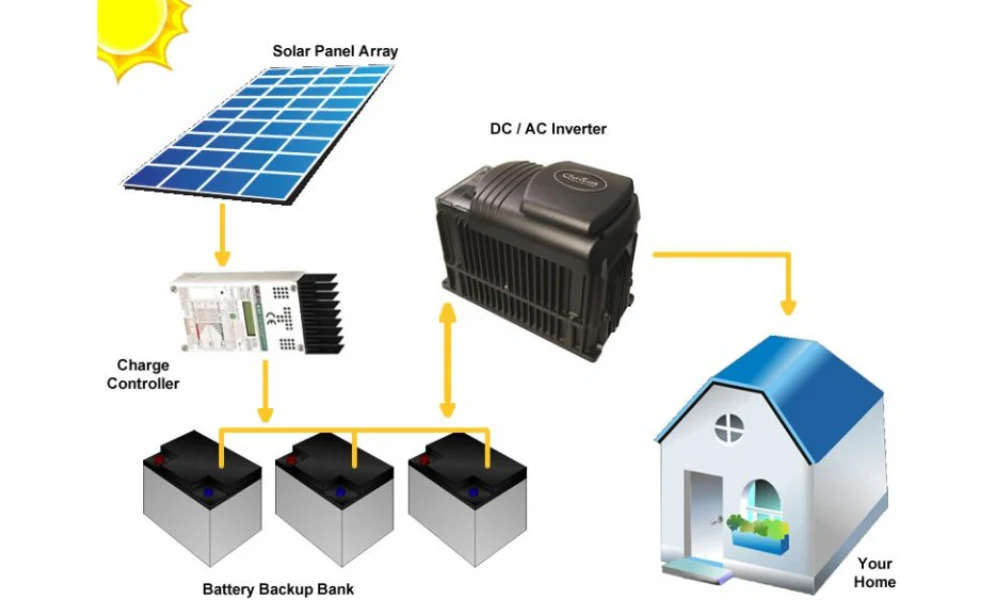
An off grid solar system is a self-sustaining power setup that generates electricity through solar panels and stores it in batteries for later use. Unlike an on-grid solar system, which connects to the electricity supply lines, this system operates completely independently.
An off grid system = Your private power plant.
It’s particularly beneficial in areas with unreliable or no grid access, such as villages, farms, remote homes, or regions with frequent outages.
How Does an Off Grid Solar System Work?
The working process is simple but efficient:
- Solar Panels capture sunlight and convert it into direct current (DC).
- Charge Controller manages the flow of energy, preventing battery overcharging.
- Battery Bank stores electricity for night or cloudy days.
- Inverter converts stored DC into alternating current (AC), which powers appliances.
- Appliances & Devices run smoothly without any dependency on the electricity board.
Example: Imagine a rural home with no power supply. With an off grid solar system, the family can run lights, fans, refrigerators, and even pumps all powered by solar.
Key Components of an Off Grid Solar System:
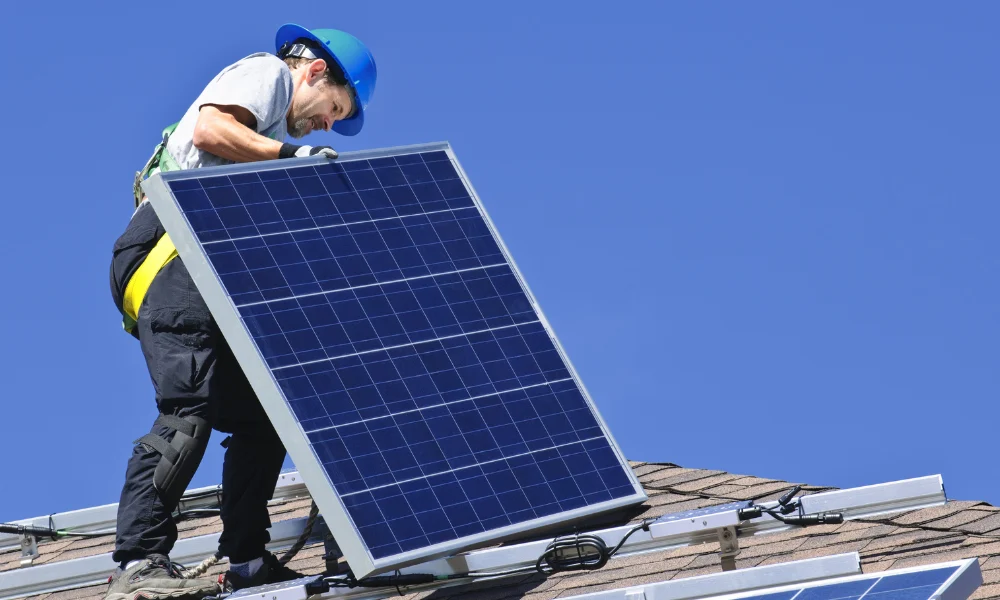
A successful system relies on several essential parts:
- Solar Panels – Monocrystalline panels (higher efficiency, more expensive) and polycrystalline panels (affordable, slightly less efficient).
- Inverter – Converts DC into AC; modern inverters come with smart monitoring features.
- Battery Storage – Lithium-ion batteries (10–15 years lifespan) are replacing older lead-acid batteries.
- Charge Controller – Acts like the system’s “traffic police,” ensuring smooth energy flow.
- Mounting Structures – Frames that position the panels for maximum sunlight.
- Wiring & Safety Equipment – Fuses, breakers, and cabling to keep the system safe and durable.
Benefits of Off Grid Solar System:
The benefits of off-grid solar are:
1. Energy Independence
Say goodbye to power cuts. With an off grid solar system, you rely solely on your panels and batteries.
2. Perfect for Remote Areas
Villages in Uttarakhand, farms in UP, or island resorts—this system thrives where grid electricity cannot reach.
3. Long-Term Cost Savings
The upfront cost is higher, but over 25 years, you save lakhs in electricity bills.
4. Eco-Friendly Power
By switching to solar, you reduce carbon emissions, helping India’s mission of Net Zero by 2070.
5. Reliable Backup
During natural disasters or blackouts, you’ll still have electricity while others may struggle.
Challenges of Off Grid Solar System:
Despite its benefits, it comes with challenges:
- High Initial Investment – Batteries + inverters make it costlier than on-grid.
- Battery Maintenance – Regular checks are required; lithium batteries reduce this but are costly.
- Space Requirements – Needs roof/land for solar panels and storage for batteries.
- System Sizing – If undersized, it may not meet energy demand; oversizing raises costs unnecessarily.
Where Can Off Grid Solar Systems Be Used?
Homes – Especially in rural or semi-urban areas with frequent outages.
Farms – To power irrigation pumps, water systems, and cold storage.
Remote Locations – Mountain lodges, forest guest houses, islands.
Emergency Needs – Hospitals, schools, and disaster relief camps.
Military & Research Bases – Remote security or science posts.
Off Grid vs On Grid vs Hybrid Solar Systems:
| Feature | Off Grid Solar System | On Grid Solar System | Hybrid Solar System |
| Grid Dependency | None | Fully dependent | Partial |
| Battery Requirement | Yes | No | Yes |
| Best For | Villages, remote areas | Cities & towns | Homes & businesses |
| Power Backup | Yes | No | Yes |
| Initial Cost | Higher | Lower | Higher but flexible |
Tips Before Installing an Off Grid Solar System
1. Assess Your Energy Needs – List appliances you want to power.
2. Check Roof Space – Ensure sunlight exposure without obstructions.
3. Choose Quality Panels – Go for Tier-1 brands like Adani, Waaree, First Solar, ReNew.
4. Right Battery Size – Plan for at least 2–3 days of storage.
5. Hire Experts – Professional installation ensures long-term efficiency.
6. Plan for Expansion – Keep options open to add panels or batteries later.
ALSO CHECK: Types of Solar Systems | Which one is the best for you?
Future of Off Grid Solar in India (2025 and Beyond)
- Government Support – Schemes like PM Surya Ghar Muft Bijli Yojana encourage adoption.
- Better Batteries – Lithium-ion is becoming affordable, and sodium-ion tech is emerging.
- Smart Monitoring – AI and IoT-based apps now allow users to track real-time performance.
- Community Solar – Villages may soon run entirely on shared solar microgrids.
Final Note
An Off Grid Solar System is more than just an energy solution it’s a lifestyle of independence, sustainability, and resilience. Whether you live in a remote area, want to avoid power cuts, or simply reduce your carbon footprint, this system provides the perfect answer.
With the right planning and high-quality equipment, you can enjoy clean energy for decades while contributing to a greener future.
Frequently Asked Questions (FAQs)
Ques 1. How does an off grid solar system work?
Ans. Solar panels capture sunlight and convert it into electricity. The charge controller regulates power, batteries store it, and the inverter converts it into usable AC power.
Ques 2. Can I run my entire house on an off grid solar system?
Ans. Yes, you can run your house on an off grid system if it’s sized correctly with enough panels, batteries, and inverter capacity.
Ques 3. What size off grid system do I need?
Ans. The size depends on your daily energy usage in kWh, available sunlight, and the number of appliances you want to power.
Ques 4. What types of batteries are used in off grid solar systems?
Ans. Lithium-ion and lead-acid batteries are the most common. Lithium is more durable, while lead-acid is cheaper upfront.
Ques 5. Can off grid solar systems work at night?
Ans. Yes, stored energy in the batteries powers appliances at night when solar panels aren’t producing electricity.