If you run a business, you have likely asked: what are commercial solar panels and will they cut my energy bills?
Commercial solar panels are not a trend. They are a practical way for companies to lower costs, meet sustainability goals, and secure reliable power.
What are commercial solar panels?
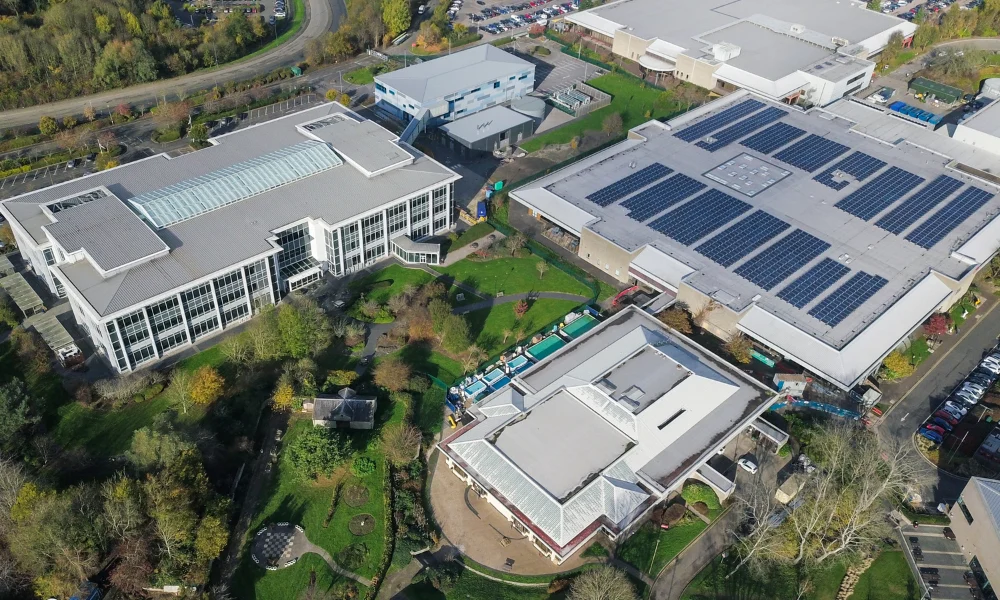
Commercial solar panels are photovoltaic modules designed for business-scale installations. They convert sunlight into electricity. A commercial system includes panels, inverters, mounting, wiring, and monitoring equipment.
Installations for businesses use higher-wattage modules and industrial-grade components to support larger arrays and longer operating hours.
Types and standard installations:
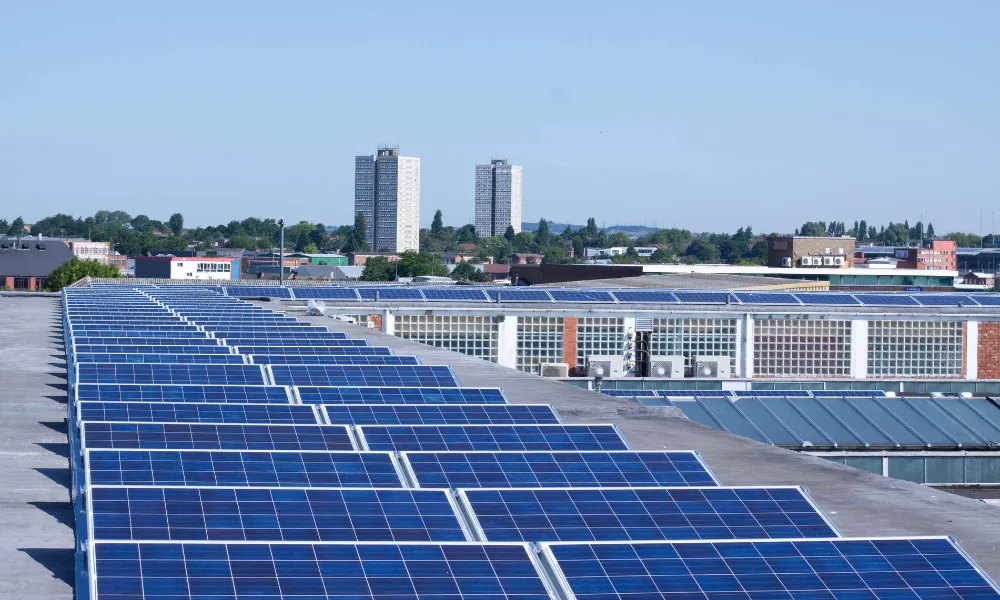
Commercial solar setups come in several forms:
- Rooftop arrays on warehouses, malls, and factories.
- Carport solar that shades parking while generating power.
- Ground-mounted plants for campuses or industrial parks.
- Building integrated photovoltaics (BIPV) that replace facades or roof elements.
Why do businesses choose solar panels for commercial use?
Businesses select solar panels for commercial use to reduce operating expenses and stabilize energy costs. Solar cuts electricity bills and can lower demand charges when paired with storage.
It also supports corporate ESG goals and helps secure supply during outages. Many companies report improved brand value after switching to solar.
Commercial solar panel efficiency:
Commercial solar panel efficiency shows how much sunlight a module converts to electricity. High-efficiency technologies such as PERC, bifacial, and mono PERC deliver more power per square meter.
Yet real-world commercial solar panel efficiency depends on more than cell type. Factors include temperature, soiling, tilt, shading and system losses.
Expect usable output to be 75–90 percent of rated capacity across a typical year. Proper design and regular cleaning keep commercial solar panel efficiency high.
Design, installation, and maintenance basics for commercial buildings:
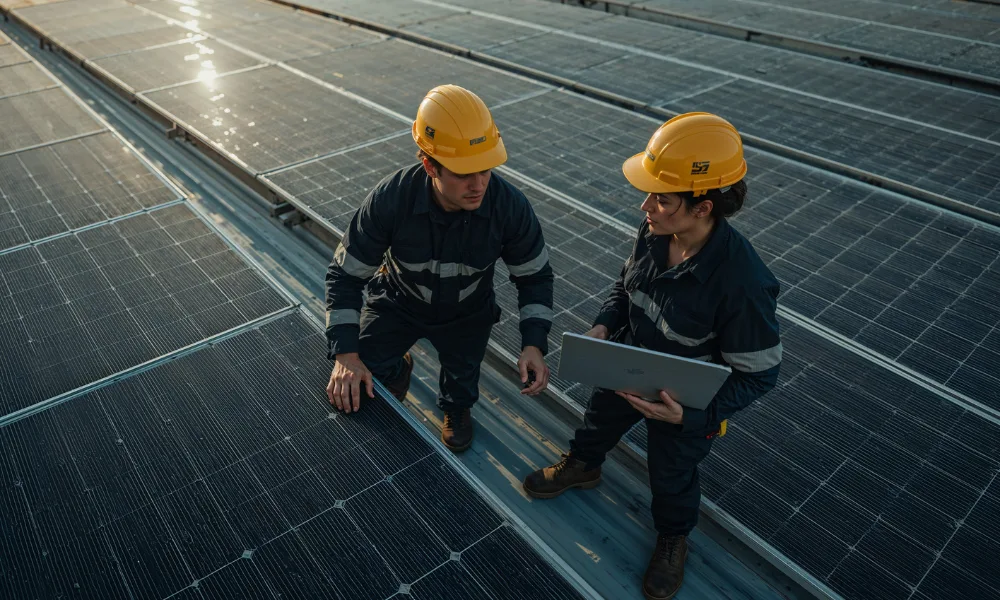
Design matters for solar panels for commercial buildings. A structural survey must confirm roof load capacity. Shading analysis identifies ideal layouts.
Electrical design should include inverter placement, combiner boxes, AC protection, and grid interconnection gear. Maintenance keeps performance strong.
Good installers offer monitoring, scheduled cleaning, and rapid response for faults.
Financing, incentives and payback
Commercial projects use several finance models: capital purchase, leases, power purchase agreements (PPA), and green loans. Government incentives, tax benefits, and accelerated depreciation shorten payback.
Typical payback ranges from three to eight years depending on tariffs, incentives, and financing structure. Battery storage improves returns when it reduces peak demand charges.
How do commercial solar panels compare with residential systems?
Solar Panels for commercial are differ from residential modules in scale, robustness and optimization. They use higher-wattage cells and stronger frames.
Systems for commercial buildings often integrate advanced monitoring and operations and maintenance (O&M) contracts. For businesses with large, flat roofs or parking areas, commercial solar offers better per-watt economics and faster returns than small residential systems.
This makes them the preferred option for companies focused on cost savings and energy resilience.
How to start: quick next steps?
Begin with a feasibility study. Get a structural and solar yield assessment. Compare finance models and request detailed proposals from experienced commercial installers.
Verify warranties for panels and workmanship, and insist on a monitoring package to track commercial solar panel efficiency.
Takeaway
Commercial solar are a mature, affordable solution for businesses that want to cut energy costs, meet sustainability targets, and improve energy independence.
If you operate a commercial building, consider a solar feasibility study to see real numbers for your site. I can draft a checklist or procurement template to help your team evaluate proposals. Which would help you next?
Frequently Asked Questions (FAQs)
Ques 1. What are commercial solar panels?
Ans. Solar panels for Commercial use are high-wattage photovoltaic modules sized for business installations, used to generate electricity for commercial buildings, warehouses, and campuses.
Ques 2. How do commercial solar work?
Ans. They convert sunlight into DC electricity via solar cells. Inverters change DC to AC for building use or grid export.
Ques 3. What is the difference between commercial and residential solar panels?
Ans. Commercial panels are designed for higher wattage, built for larger arrays, and often feature more robust frames and advanced monitoring for industrial use.
Ques 4. Are Solar panels for Commercial use cost-effective?
Ans. Yes, for large roofs and campuses, commercial panels deliver lower cost per watt and faster payback than small residential systems.
Ques 5. What affects commercial solar panel efficiency?
Ans. Temperature, shading, soiling, panel orientation, and inverter losses all reduce real-world efficiency.
Ques 6. Can commercial solar panels power an entire business?
Ans. They can supply a large share of energy needs. Full self-sufficiency depends on roof area, energy demand, storage, and grid access.