
Electricity bills are rising and rooftop space is limited so which solar panel is best for home in India? With so many opinions online, the choice can feel confusing.
Which Solar Panel is best for Home?
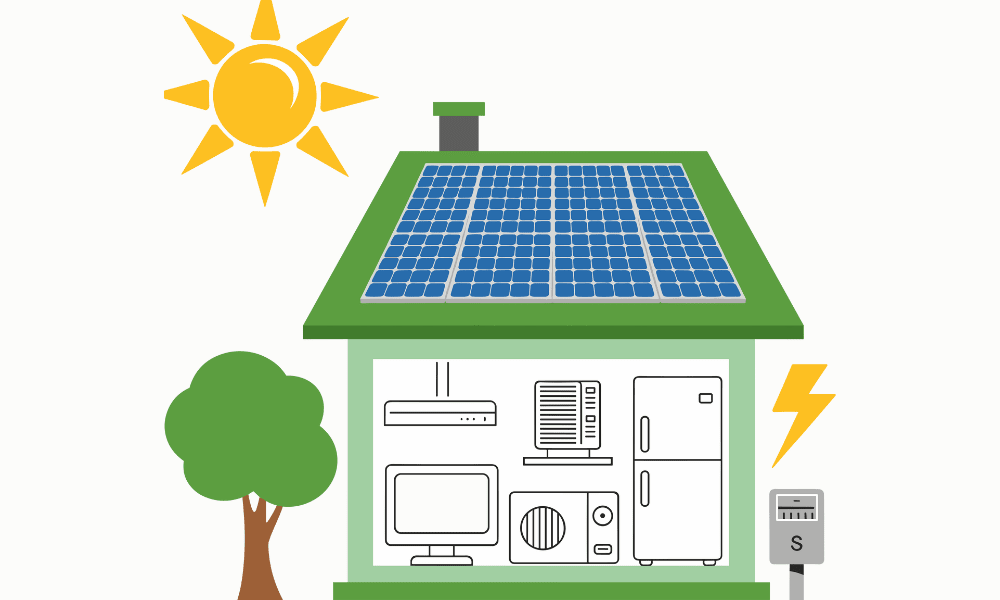
For most Indian homes, monocrystalline panels, especially Mono PERC or TOPCon, are the best choice. They deliver higher efficiency, handle heat better, and generate more power from less roof area.
If budget is tight and you have ample space, polycrystalline panels can work, but you’ll typically need more panels to reach the same output.
Understanding Your Options:
1. Monocrystalline (Mono): Made from a single crystal; sleek black look; typically 19–22% efficiency. Great for small terraces and premium performance.
2. Mono PERC / TOPCon: Upgraded mono tech that captures more light and performs better in real conditions (heat, low light).
Polycrystalline (Poly): Multiple crystals; bluish speckled look; ~15–17% efficiency; cheaper per watt but needs more area.
3. Bifacial: Usually mono-based and can capture reflected light from the back; shines on open racks or reflective roofs.
What Matters Most for Indian Homes?
1) Roof Space vs Output
If your terrace is modest, higher efficiency wins. Mono/TOPCon gives more watts per square meter, so you reach your target kW with fewer modules.
2) Summer Heat & Temperature Coefficient
Panels lose power as they get hot. Mono/TOPCon generally has a better temperature coefficient, so summer output holds up better in Indian cities.
3) Low-Light & Monsoon Performance
During cloudy or hazy days, mono-based panels usually keep producing more in diffused light than poly.
4) Shade & Complex Roofs
Water tanks, parapets, and antennas create shadows. Consider module-level power electronics (optimizers or microinverters). Paired with mono, they help you squeeze more from tricky roofs.
5) Aesthetics & Weight
Many homeowners prefer the uniform black look of mono. Weight is similar across types, but always confirm your roof’s structural capacity.
ALSO CHECK OUT: What to know how to reduce current electricity bill?
Cost, Warranty, and Payback:
Yes, polycrystalline often costs less per watt upfront. But the real question isn’t just price, it’s ROI and payback.
Because monocrystalline generates more energy over time and degrades more slowly, it frequently pays back faster in high-tariff states.
Check the warranty specifics:
- Product (manufacturing defects): typically 10–15 years.
- Performance (power output): often 25 years with a linear degradation curve (e.g., ~2% in year one, ~0.5–0.6%/year).
Include local realities in your math: net metering policies, your DISCOM’s process, and MNRE/PM Surya Ghar subsidy eligibility. These can meaningfully shorten payback.
The Installer Matters as Much as the Panel
Even the best module underperforms with a poor install. Choose an MNRE-empaneled vendor who:
- Conducts a proper site survey and shading analysis
- Designs correct stringing and earthing/lightning protection
- Provides a commissioning report (PR test/IV curves) and monitoring app setup
- Offers a workmanship warranty and clear service SLAs
Why This Guide Is Better Than the Rest
Most comparisons drown you in specs. This article keeps which solar panel is best for home front and center and explains how panels behave on real Indian rooftops-with heat, clouds, small terraces, and evolving net metering rules. It’s simple, unbiased, and focused on decisions that impact your bills.
Your Smart, Future-Proof Choice
If you want fewer panels, stronger summer performance, and better long-term savings, choose monocrystalline, ideally Mono PERC or TOPCon, for your home.
Read the warranty, pair with a quality inverter, and hire a meticulous installer. Do this once, and your rooftop solar will quietly pay you back for decades.
Frequently Asked Questions (FAQs)
Ques 1. Which solar panel is best for home in India?
Ans. For most rooftops, monocrystalline (Mono PERC/TOPCon) is best due to higher efficiency and better heat/low-light performance.
Ques 2. Which performs better in Indian summers?
Ans. Monocrystalline usually does better thanks to a superior temperature coefficient.
Ques 3. What is the typical lifespan of solar panels?
Ans. Panels often last 25+ years with a linear performance warranty.
Ques 4. What is net metering and do I qualify?
Ans. Net metering credits exported solar units against your bill. Eligibility and caps vary by state/DISCOM.
Ques 5. Are subsidies available for home solar?
Ans. Yes, under MNRE/PM Surya Ghar for residential rooftop systems, subject to current slabs and empaneled vendors.
Ques 6. What maintenance is required?
Ans. Mostly cleaning panels (dust, bird droppings) and annual health checks. Avoid harsh chemicals; use soft water.


This is really helpful 👏