
Solar power is now one of the fastest-growing ways to get energy in India. The first big question for homeowners or businesses that want to install solar is whether they should get an on-grid or off-grid system.
Knowing the difference between on grid and off grid solar system setups can help you choose the best one for your needs and budget.
What is an On-Grid Solar System?

An on-grid solar system is one that is directly connected to the main electricity network. Solar panels make electricity, which goes into the house’s load. Any extra power goes back to the grid. In many states, net metering lets you get credits or payments for the extra energy you give to the grid.
Key Features of On-Grid Solar:
- Works in coordination with the local electricity grid
- No batteries are required for storage, reducing initial costs
- Net metering allows credit for surplus power sent back
Advantages:
- Cost-effective setup: Fewer components like batteries lower the upfront investment.
- Earn credits: You can offset your electricity bill by exporting excess energy.
- Low maintenance: With fewer parts, the system requires less upkeep.
Limitations:
- Grid dependency: It shuts down during power outages for safety.
- No backup power: Without batteries, you cannot use solar power at night or when the grid is down.
What is an Off-Grid Solar System?
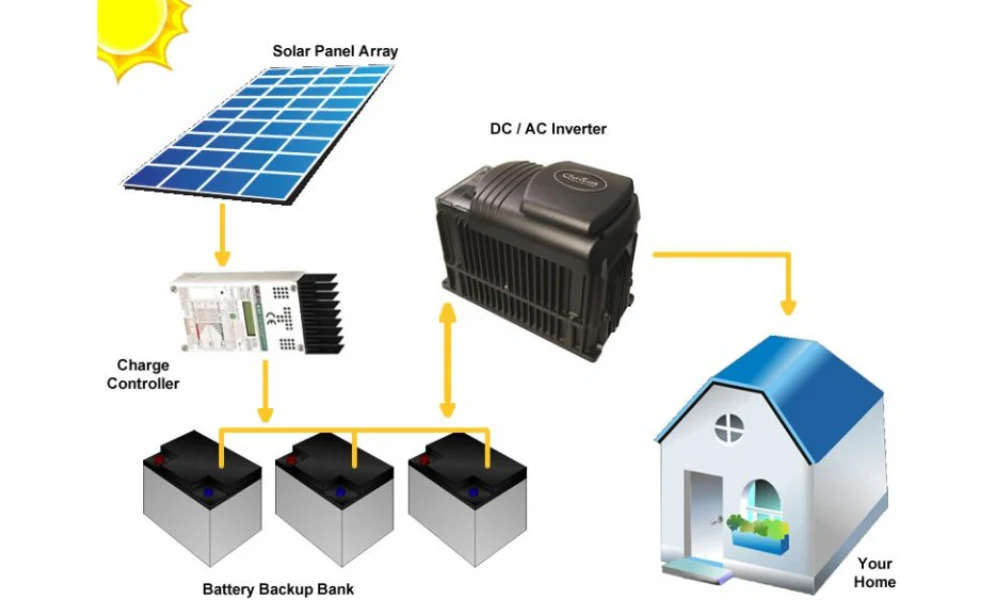
An off-grid solar system functions independently from the primary electrical grid. It stores energy produced by the solar panels during the day in batteries so that it can be used at night or in cloudy weather.
Key Features of Off-Grid Solar:
- Completely independent of utility power lines
- Requires battery banks and charge controllers for solar energy storage
- Ideal for remote areas where grid connectivity is unreliable
Advantages:
- Energy independence: You are not affected by power cuts or rising electricity tariffs.
- Perfect for remote locations: Ideal for rural areas where the grid is not accessible.
- Sustainable backup: Batteries provide power even at night or during outages.
Limitations:
- Higher installation cost: Batteries and inverters increase upfront costs.
- Battery maintenance: Batteries need periodic replacement and care.
Key Difference between On grid and Off grid Solar System :
| Feature | On-Grid Solar System | Off-Grid Solar System |
| Grid Connection | Connected to utility grid | Completely independent |
| Energy Storage | No batteries required | Requires battery bank |
| Power During Outage | Stops supplying power for safety | Continues to supply stored energy |
| Initial Cost | Lower (no batteries) | Higher due to batteries and inverter |
| Ideal For | Urban areas with stable grid | Remote areas or places with outages |
Which One Should You Choose?
- Urban homes and businesses: An on-grid solar system is usually the best option because it’s economical and takes advantage of net metering.
- Remote locations or unreliable grid: An off-grid solar system provides total energy independence and reliable power supply.
- Hybrid Option: For the best of both worlds, consider a hybrid system with both grid connection and battery storage.
Why Understanding the Difference Matters?
Choosing the right solar setup impacts your energy savings, initial investment, and long-term maintenance. By understanding the difference between On grid and Off grid Solar System configurations, you can make an informed decision that matches your lifestyle, location, and budget.
Frequently Asked Questions (FAQs)
Ques 1. What is the basic difference between On grid and Off grid Solar System ?
Ans. On-grid systems connect to the public electricity grid, while off-grid systems operate independently using battery storage.
Ques 2. How long do solar batteries last?
Ans. Typically 5–10 years depending on quality and maintenance.
Ques 3. Is maintenance different for both systems?
Ans. Yes, off-grid requires regular battery maintenance while on-grid is relatively low-maintenance.
Ques 4. Which system is more eco-friendly?
Ans. Both are eco-friendly; off-grid avoids grid dependency but has battery disposal considerations.
Ques 5. Do both systems require permissions?
Ans. Yes, local authorities often require permits and inspections.


