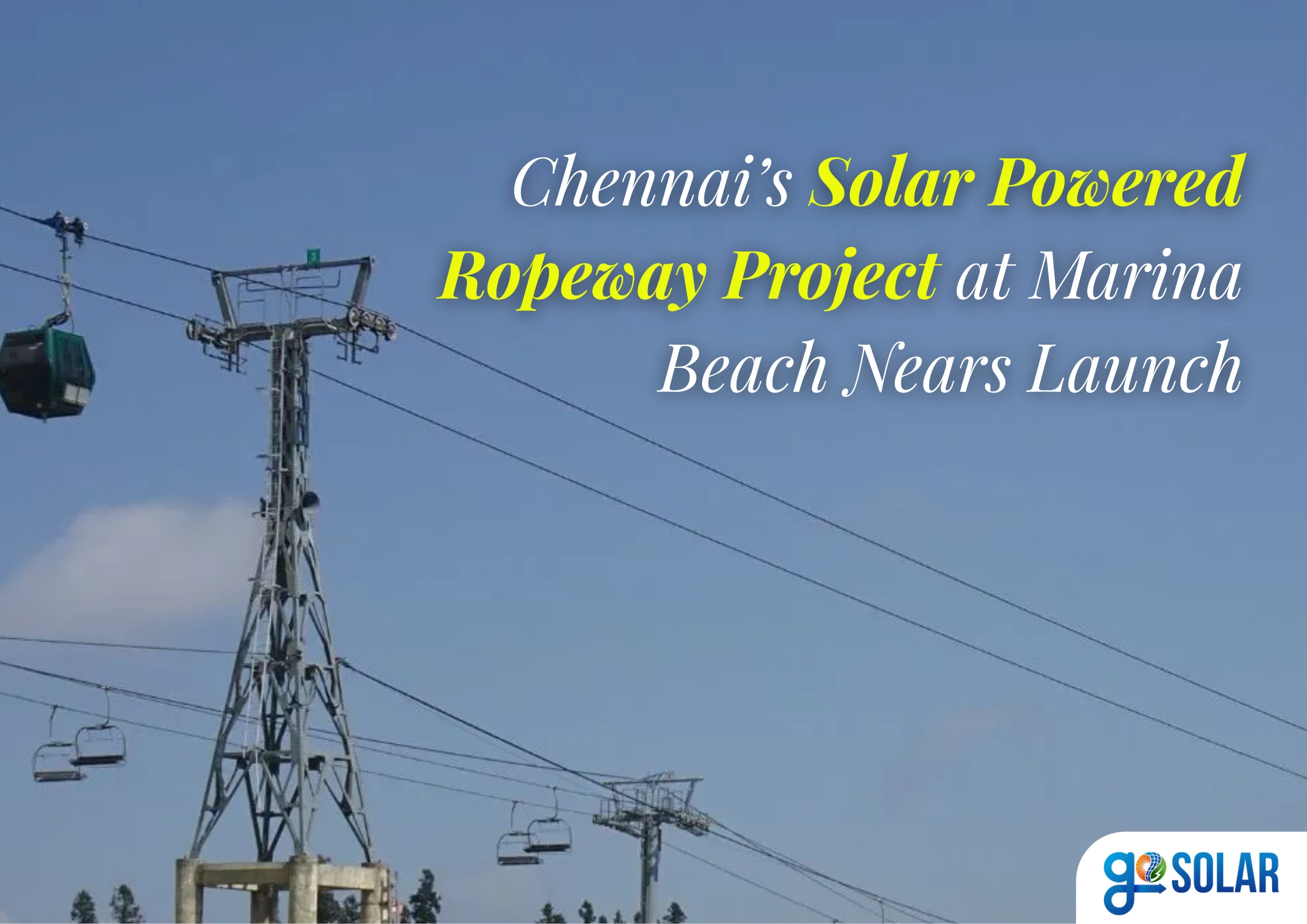
The Solar Powered Ropeway Project planned for Chennai’s Marina Beach will introduce a solar-powered aerial transit line that links key seafront spots with clean energy and stunning coastal views.
Imagine gliding above Marina Beach inside a modern, solar-powered cabin. The project promises a sustainable and scenic ride that also serves as a practical new transportation option.
Project Summary
The Solar Powered Ropeway Project is an aerial cable-car system planned along the Marina Beach stretch.
It aims to connect major points along the promenade, offering both a tourist attraction and a practical transit link for locals.
Route, Key Features, and Sustainability
The route will run above the road along the beachfront, giving riders wide coastal views. The system is designed to run on power supplied by solar panels, reducing its carbon footprint.
Stations will be placed at important landmarks, and the aim is to keep environmental impact low while improving access to the beach.
Why It Matters Now
Chennai faces growing traffic and rising energy needs, especially in busy coastal areas. A solar-powered ropeway offers a low-emission transit option, eases congestion, and highlights the city’s move toward cleaner infrastructure.
With solar power becoming more affordable, the project fits well with current priorities for sustainable urban development.
Technical and Design Considerations
Key design points include integrating solar power with the ropeway’s electrical systems, ensuring cabins and towers withstand coastal wind and salt, and building safe, accessible stations.
Solar arrays must provide reliable energy, while structural and safety standards must meet urban and coastal demands.
Stakeholders, Funding and Timeline
The project is being driven by city authorities, with plans to invite firms to bid for construction and operation.
Funding is expected to include public investment and private partners. Tenders and approvals are the next steps before construction can start.
Challenges and Why This Project is Better
Ropeway projects face hurdles such as technical complexity, permits, and cost.
This project improves on typical plans by using solar energy to lower running costs, by offering scenic value that boosts tourism, and by serving both visitors and daily commuters.
As a low-impact transit option designed for the coastline, it has advantages over road expansion or other larger infrastructure works.
What It Means for Chennai
For residents and visitors, the ropeway will add a new way to move along the beach and enjoy coastal views. For the city, it could bring jobs, more tourism, and stronger green credentials. The project also offers a model for combining clean energy with urban mobility.
Quick Next Steps
Stakeholders should watch for the tender announcement and project approvals.
Local businesses and property owners near the route may find new opportunities. Residents can expect public notices and consultations as plans move forward.
Conclusion
The Solar Powered Ropeway Project will bring solar-driven aerial transit to Chennai’s Marina Beach, blending tourism, sustainable transport, and coastal access.
Keep an eye on announcements if you are interested in the project’s timeline or opportunities it might create.