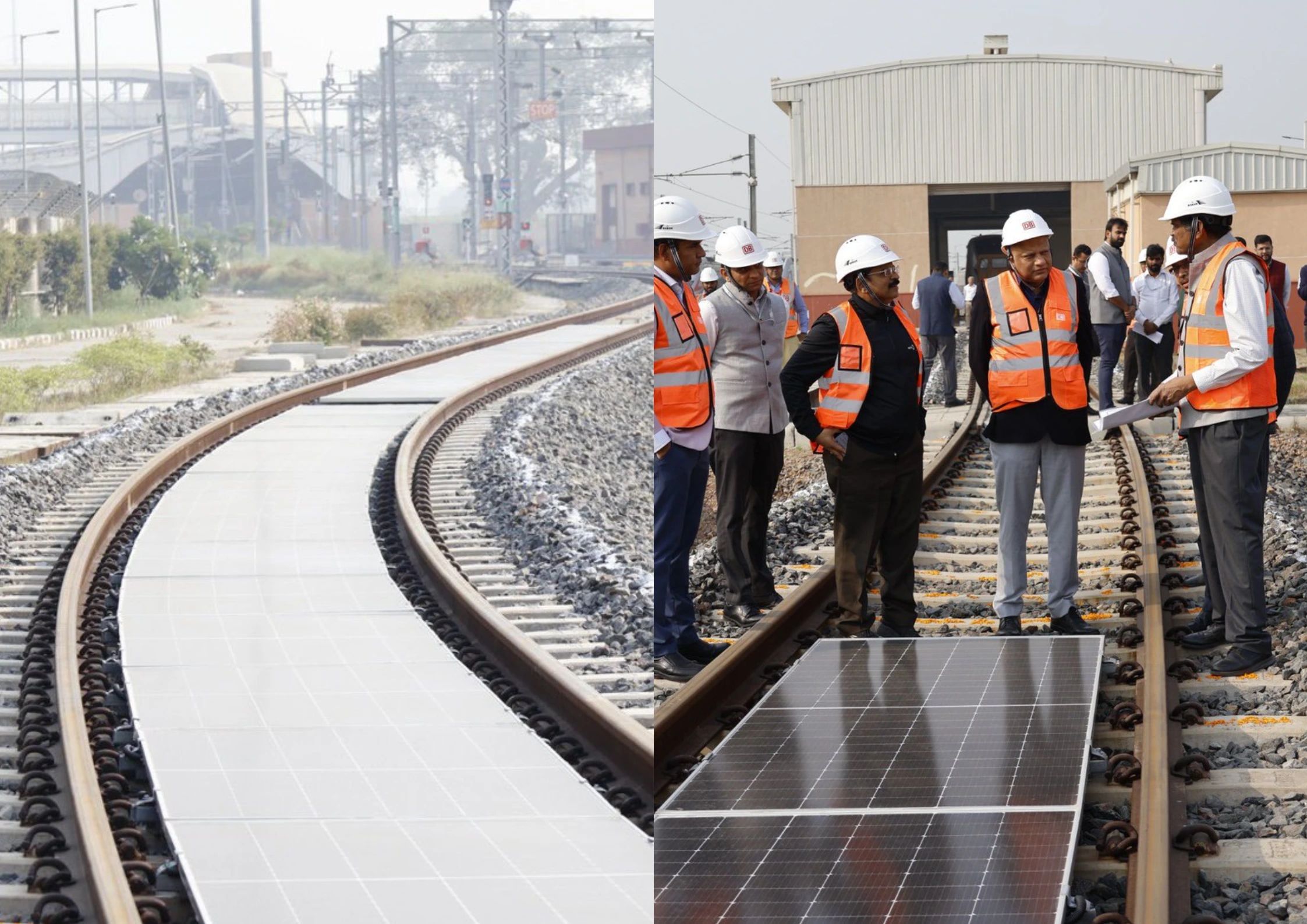
At the Namo Bharat Depot in Duhai, Ghaziabad, the NCRTC Launches India’s First Solar on track system, marking a significant advancement in environmentally friendly transportation.
This creative pilot project is the first to directly install solar panels on the railway track infrastructure in any RRTS or metro network across the nation.
Project Highlights:
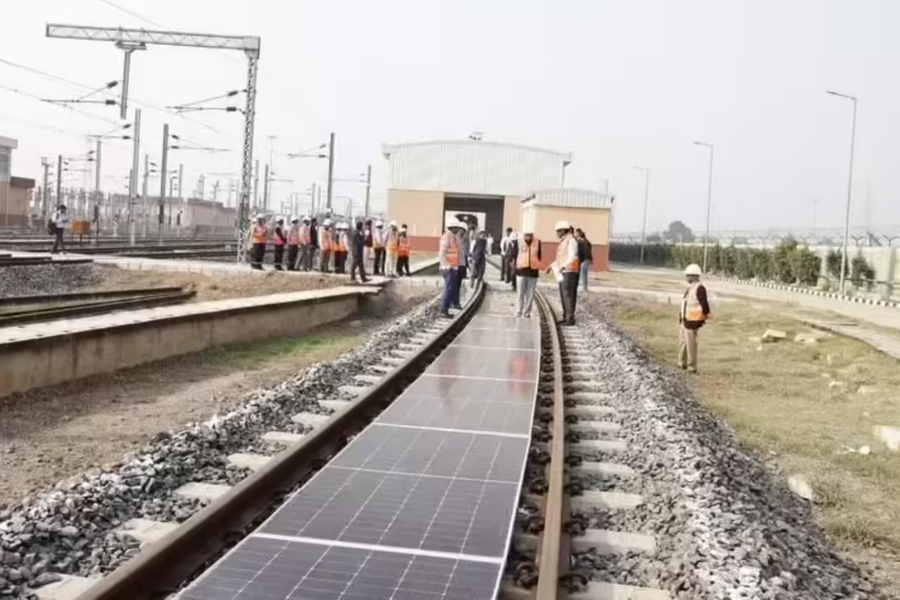
- Installation Site: Pit Wheel Track at Namo Bharat Depot
- Solar Setup: 28 high-efficiency panels rated at 550 Wp each
- Total Capacity: 15.4 kWp across a 70-meter stretch
- Annual Output: Estimated 17,500 kWh of clean energy
- Carbon Offset: Reduces 16 tonnes of CO₂ emissions annually
Sustainability Meets Innovation:
This initiative reflects NCRTC’s commitment to net-zero energy consumption and smart space utilization. By harnessing solar energy directly from the tracks, the project not only optimizes unused infrastructure but also sets a precedent for renewable integration in transport systems.
The system is designed to power depot operations and auxiliary systems, contributing to energy self-sufficiency and aligning with the National Solar Mission.
Strategic Impact
- First in India: No other metro or RRTS system has implemented solar panels on track infrastructure.
- Scalability Potential: If successful, the model could be replicated across other corridors and depots.
- Public-Private Synergy: Reinforces India’s push for climate-resilient infrastructure through innovation.
Conclusion
The launch of India’s first Solar on Track system by NCRTC is a bold step toward sustainable urban transport. As the country accelerates its green transition, such innovations will play a pivotal role in shaping energy-efficient infrastructure for future generations.
Frequently Asked Questions (FAQs)
Ques 1. What is the ‘Solar on Track’ system launched by NCRTC?
Ans. The ‘Solar on Track’ system by NCRTC installs solar panels directly on railway tracks at the Namo Bharat Depot in Duhai. As India’s first project of its kind, it uses idle track space to produce clean energy, cut carbon emissions, and advance NCRTC’s sustainability goals.
Ques 2. Where has the NCRTC implemented India’s first solar on-track system?
Ans. At the Namo Bharat Depot in Duhai, Ghaziabad, Uttar Pradesh, NCRTC has introduced India’s first solar on-track system. Installed on the Pit Wheel Track, this project represents a groundbreaking advancement for the country’s rapid rail and metro networks.
Ques 3. What are the technical specifications of the NCRTC solar on track installation?
Ans. The pilot project utilizes 28 solar panels, each with a capacity of 550 Wp, resulting in a total system output of 15.4 kWp. Installed along a 70-metre section of track, the setup is expected to produce approximately 17,500 kWh of electricity annually.
Ques 4. How much energy will the NCRTC solar on-track system generate annually?
Ans. The NCRTC solar on-track system at the Namo Bharat Depot is projected to generate approximately 17,500 kilowatt-hours (kWh) of electricity annually. This output is based on the installed capacity and the region’s solar irradiance, making a meaningful contribution to the depot’s energy needs.
Ques 5. What is the expected environmental impact of the NCRTC solar on track project?
Ans. The project is expected to cut around 16 tonnes of CO₂ emissions each year. By generating solar power, it contributes to NCRTC’s aim of achieving net‑zero operations and supports India’s National Solar Mission.