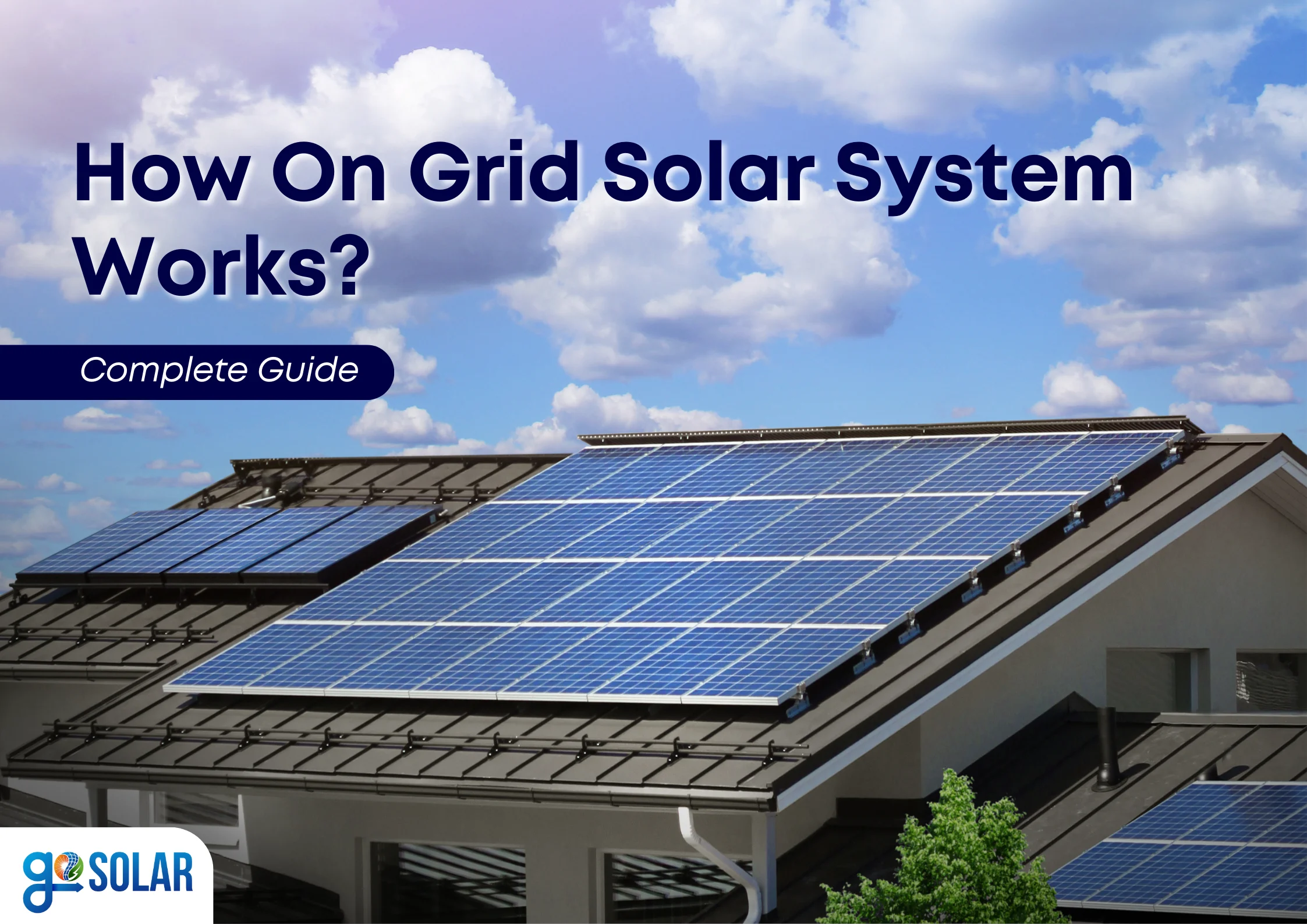
Electricity bills in India are rising every year, and more households and businesses are looking for sustainable, cost-effective solutions. This is where on-grid solar systems come in. They allow you to generate your own electricity using sunlight and stay connected to the state electricity grid.
Understanding how on grid solar system works is important because it helps you see how simple the process is and why it’s becoming the most popular solar choice today.
What is an On-Grid Solar System?

An on-grid solar system, also known as a grid-tied solar system, is a solar setup that works with your state electricity supply. Unlike off-grid systems, it does not use batteries for storage.
Instead, it supplies electricity to your home or office during the day and sends any excess power back to the main grid. Through net metering, you get credits for the extra energy supplied, which reduces your monthly electricity bills.
This makes on-grid solar both economical and eco-friendly. It’s widely used in homes, industries, schools, and commercial buildings.
Main Components of an On-Grid Solar System:
For a better understanding of how on grid solar system works, let’s look at the main components:
- Solar Panels: Capture sunlight and convert it into direct current (DC) electricity.
- Solar Inverter: Converts DC into alternating current (AC), which is the usable form of electricity in households and industries.
- Net Meter: A special meter that tracks both the electricity you consume from the grid and the surplus you supply back.
- Grid Connection: Links your solar system with the main electricity supply.
Step-by-Step | How On Grid Solar System Works?
Here’s a simple breakdown of the process:
- Sunlight Captured by Panels
Solar panels installed on rooftops absorb sunlight and generate DC electricity. - Conversion Through Inverter
The DC electricity is sent to a solar inverter, which converts it into AC power. - Power Usage in Home or Business
The converted AC power is used to run your appliances, lights, fans, and machines directly. - Excess Power Sent to Grid
If your panels generate more electricity than you consume, the surplus is sent back to the electricity grid. - Net Metering Benefits
With net metering, the power you export is credited against your electricity consumption. This way, your bills are significantly reduced.
This is the core of how on grid solar system works, a cycle of production, consumption, and export that keeps you energy-efficient.
Benefits of On-Grid Solar Systems:
The rising demand for solar is mainly because of the benefits that on-grid systems offer:
- Lower Electricity Bills: You pay only for the net electricity consumed.
- No Batteries Needed: Reduces cost and maintenance compared to off-grid systems.
- Eco-Friendly Energy: Clean and renewable power reduces your carbon footprint.
- High ROI: The system pays for itself within a few years through savings.
- Reliable: Works seamlessly with the existing grid supply.
Limitations of On-Grid Solar Systems:
While on-grid solar is highly effective, it does have certain limitations:
- Dependent on the Grid: The system does not function during a power cut unless paired with a hybrid setup.
- No Energy Storage: Since there are no batteries, you can’t store electricity for night-time usage.
Despite these, the affordability and efficiency of on-grid solar systems make them the preferred choice for most households and businesses.
Why This Guide Is Better Than Others?
Most guides on the internet explain technical details in complicated language. This article is different because:
- It explains how on grid solar system works in simple, humanized language.
- It includes both benefits and limitations for a balanced view.
- It highlights practical, step-by-step working instead of just theory.
- It connects solar to real-life advantages like reduced bills and energy independence.
By combining clarity with SEO optimization, this guide stands out from the rest.
On-Grid Solar as the Smart Energy Choice:
Switching to solar energy is no longer just an option; it’s a necessity for a sustainable future. Understanding how on grid solar system works shows why it’s the most popular and cost-effective choice in India today. From capturing sunlight to crediting your electricity bill with net metering, the process is simple yet powerful.
If you want to cut down on bills, support clean energy, and make a wise investment, on-grid solar is the answer. It’s not only good for your pocket but also for the planet.
Frequently Asked Questions (FAQs)
Ques 1. How on grid solar system works in simple words?
Ans. Solar panels produce electricity, the inverter converts it for use, and any unused power goes to the grid through net metering.
Ques 2. Why is an on-grid solar system popular?
Ans. Because it reduces electricity bills, requires no batteries, and offers a quick return on investment.
Ques 3. What components are used in an on-grid solar system?
Ans. Main parts include solar panels, an inverter, a net meter, and grid connection cables.
Ques 4. Do on-grid solar systems need batteries?
Ans. No, they work without batteries since power is used instantly or sent to the grid.
Ques 5. What are the advantages of on-grid solar systems?
Ans. Lower electricity bills, less maintenance, no battery cost, and eco-friendly power.